


Post Preview
The Strategic Convergence of Enterprise IT and Cybersecurity
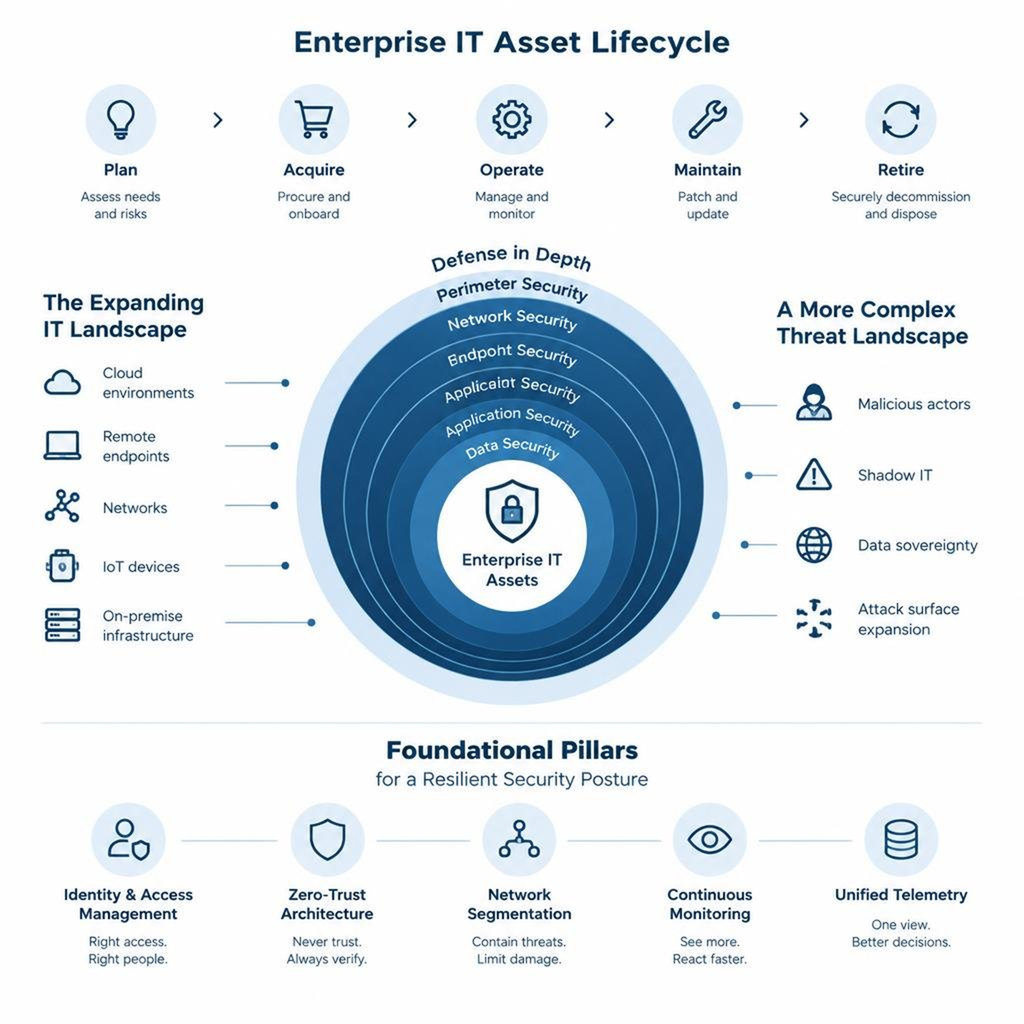
The distinction between traditional IT management and cybersecurity has blurred significantly in September 2026. Enterprise IT, encompassing all hardware, software, data, and networks an organization uses, is now inextricably linked with its cybersecurity posture. The sheer scale and complexity of modern enterprises mean that every IT decision has security implications. Our digital footprint is no longer confined to on-premise servers; it spans cloud environments, remote endpoints, and an ever-growing array of IoT devices. This expansion directly correlates with an attack surface expansion, presenting more entry points for malicious actors.
Achieving comprehensive asset visibility across this sprawling landscape is paramount. Without knowing what assets exist, where they are, and who accesses them, effective security is impossible. This challenge is further complicated by shadow IT, where departments or individuals deploy unauthorized software or services, creating unmanaged vulnerabilities. Data sovereignty, the legal requirement for data to be subject to the laws of the country in which it is collected and processed, adds another layer of complexity, particularly for multinational organizations.
At its core, enterprise cybersecurity is about building operational resilience. It’s about ensuring that even when a breach occurs, the organization can continue critical operations, recover swiftly, and minimize impact. This requires a defense-in-depth strategy, layering multiple security controls to create robust barriers against threats.
Foundational Pillars of Enterprise IT and Cybersecurity
Building a resilient enterprise security posture rests on several foundational pillars. Identity and Access Management (IAM) is perhaps the most critical, ensuring that only authorized users and systems can access specific resources. This is underpinned by the principle of least privilege, granting users only the minimum access necessary to perform their job functions. In September 2026, the adoption of a Zero-Trust Architecture (ZTA) has moved from aspiration to imperative. ZTA operates on the mantra “never trust, always verify,” continuously authenticating and authorizing every user and device, regardless of their location on or off the corporate network.
Network segmentation further isolates critical systems, preventing lateral movement of threats within the network. Should one segment be compromised, the breach is contained, limiting potential damage. Effective security also relies on continuous monitoring, providing real-time visibility into network activity, system logs, and user behavior. This data feeds into unified telemetry, consolidating security information from disparate sources to provide a holistic view of the organization’s security health.
Business Continuity, Compliance, and Enterprise Risk
Enterprise cybersecurity is not merely a technical concern; it’s a fundamental business imperative directly impacting continuity, compliance, and overall risk. A robust security strategy is essential for protecting against financial losses, reputational damage, and regulatory penalties. The average cost of a data breach for enterprises was $4.88 million in 2024, and $4.4 million in 2025, underscoring the significant financial stakes.
Organizations must adhere to a complex web of regulatory standards, including GDPR, HIPAA, PCI DSS, and various national and industry-specific mandates. Non-compliance can lead to hefty fines and legal repercussions. The NIST Cybersecurity Framework (NIST CSF) provides a widely adopted blueprint for managing cybersecurity risk, helping organizations assess their current state, target future improvements, and communicate risk effectively.
Effective cybersecurity is crucial for downtime mitigation. Cyberattacks, especially ransomware, can cripple operations for days or weeks, leading to massive revenue losses and disruption. By proactively addressing vulnerabilities and implementing strong incident response plans, organizations can significantly reduce the impact of such events. Maintaining a strong risk posture requires ongoing assessments, identifying potential threats, and evaluating the effectiveness of existing controls. This enables organizations to prioritize investments and allocate resources strategically. A well-implemented cybersecurity program ensures audit readiness, providing the necessary documentation and evidence to demonstrate compliance with internal policies and external regulations. For organizations seeking comprehensive support in navigating these complex requirements, specialized services focused on embedded cybersecurity and compliance can be invaluable, offering expertise in integrating security measures directly into business processes and regulatory frameworks.
Core Threats and Threat Detection in Enterprise IT Environments
The threat landscape facing enterprises is dynamic and increasingly sophisticated. In September 2026, organizations contend with both familiar adversaries and emerging, AI-driven dangers.
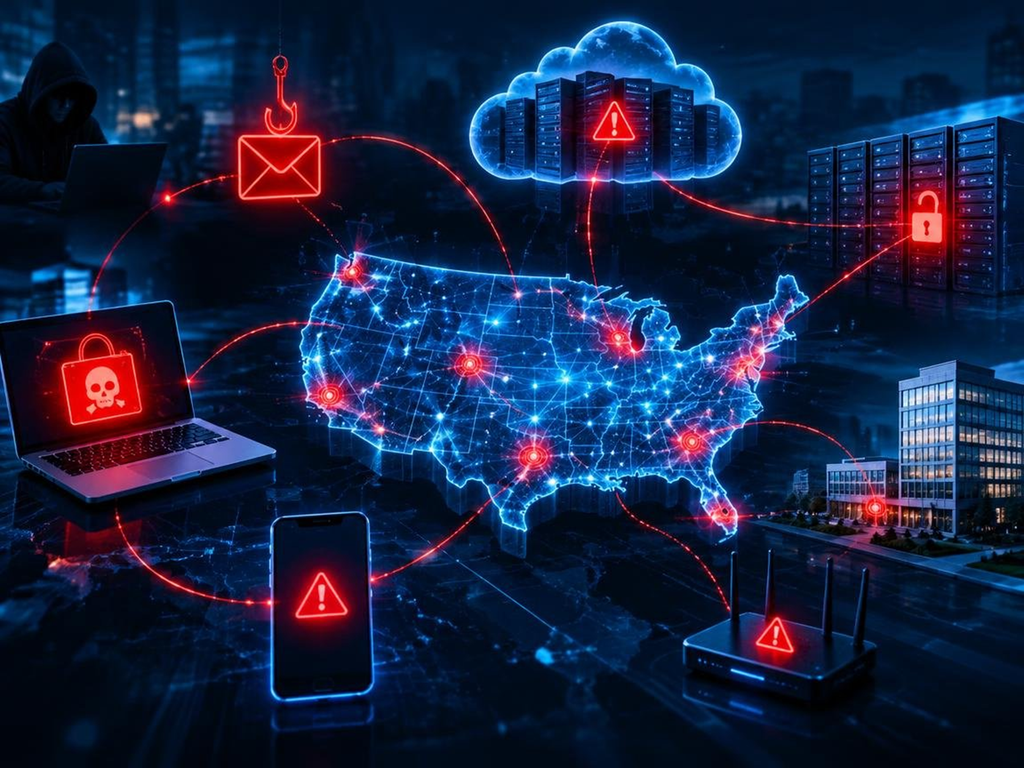
Ransomware propagation remains a top concern, with 71% of organizations victimized in 2022. These attacks have evolved, often involving data exfiltration before encryption, adding extortion to the demand for ransom. Insider threats, both malicious and accidental, continue to be a significant vulnerability. A staggering 83% of organizations experienced at least one insider attack, and larger-scale insider attacks increased fivefold year over year. The Verizon Data Breach Investigations Report highlights that 74% of all data breaches involve human interaction, emphasizing the critical need for employee training and robust internal controls.
The rise of AI introduces new attack vectors. AI manipulation involves attackers using AI to generate highly convincing phishing campaigns or bypass security filters. Credential harvesting techniques are continuously refined, often leveraging social engineering and sophisticated phishing to steal login details, which then enable further access within the enterprise.
Risk Category Traditional Enterprise Security Risks Emerging Enterprise Security Risks Attack Vectors Malware, phishing, DDoS, unpatched vulnerabilities AI-powered attacks, deepfakes, supply chain attacks, non-human identities Threat Actors Cybercriminals, hacktivists Nation-state actors, sophisticated organized crime, AI-offensive automation Target Scope Networks, servers, endpoints Cloud infrastructure, IoT ecosystems, remote work environments, AI models Complexity Signature-based detection, perimeter defense Behavioral analytics, zero-trust, quantum-resistant encryption, runtime protection Impact Data loss, system downtime, financial penalties Reputational damage, critical infrastructure disruption, AI model poisoning Mitigation Focus Firewalls, antivirus, patching, employee training AI-driven threat detection, SASE, DevSecOps, quantum preparedness, security culture Advanced Threat Detection and Threat Hunting
To combat these evolving threats, enterprises rely on advanced detection and response capabilities. Security Information and Event Management (SIEM) platforms aggregate and analyze log data from across the IT environment, providing a centralized view of security events. However, the sheer volume of alerts can lead to alert fatigue. This is where Security Orchestration, Automation, and Response (SOAR) platforms become critical, automating routine tasks, prioritizing alerts, and orchestrating responses to accelerate incident resolution. Splunk Enterprise Security, for instance, leverages agentic AI to automate low-complexity SOC tasks and reduce alert volume by up to 90% with Risk-Based Alerting, leading to 55% faster incident resolution.
Behavioral analytics, often powered by User and Entity Behavior Analytics (UEBA), identifies anomalous activities that deviate from established baselines, flagging potential insider threats or compromised accounts. This is particularly effective against advanced persistent threats that might evade traditional signature-based detection. Threat intelligence feeds provide context on emerging threats, attacker tactics, techniques, and procedures (TTPs), enabling proactive defense. The goal is to reduce the mean time to detect (MTTD) and mean time to respond (MTTR), minimizing the window of opportunity for attackers.
Managing Non-Human Identities and Cloud Vulnerabilities
A significant challenge in modern enterprises is securing non-human identities, such as service accounts, APIs, and machine identities. These often have broad access permissions and are frequently overlooked in traditional IAM strategies. API security is crucial, as APIs are increasingly used to connect applications and services, creating new attack vectors if not properly secured. Misconfigured APIs can expose sensitive data or allow unauthorized access.
The rapid adoption of cloud services introduces its own set of vulnerabilities. Cloud misconfigurations are a leading cause of data breaches, often stemming from improperly secured storage buckets or overly permissive access controls. The shift towards agile development methodologies necessitates DevSecOps, integrating security practices throughout the entire software development lifecycle to identify and remediate vulnerabilities early. Without proper controls, non-human identities and cloud misconfigurations can lead to privilege escalation, where an attacker gains higher levels of access within the system, potentially compromising critical data and infrastructure. Continuous discovery of non-human identities and their associated access rights is an actionable step for enterprises.
Lifecycle Asset Governance: From Deployment to Secure Disposal
Effective enterprise cybersecurity extends beyond active networks to encompass the entire lifecycle of every IT asset. From the moment an asset is acquired until its final disposition, robust governance is essential.

Asset inventory forms the bedrock of this governance, detailing every piece of hardware and software, its location, configuration, and ownership. This comprehensive inventory is crucial for vulnerability management, compliance, and incident response. Configuration management ensures that all assets are configured securely and consistently, adhering to organizational policies and industry best practices. This includes regular patching and updates, as unpatched vulnerabilities are a common entry point for attackers.
The hardware lifecycle involves planned acquisition, deployment, maintenance, and eventual retirement. Each stage presents unique security considerations. For instance, remote workers connecting via unsecured public Wi-Fi can lead to data exfiltration if endpoints aren’t properly secured. When assets reach their end-of-life, proper chain-of-custody procedures are vital to prevent data breaches. This means meticulously tracking assets as they are moved, stored, and eventually decommissioned.
The final stage, often overlooked, is the secure disposal of IT assets. Whether it’s a server, a laptop, or a mobile device, residual data can pose a significant risk. This is where specialized services for secure IT asset disposition become indispensable. These services ensure that all data is irrevocably erased or destroyed, protecting sensitive information and maintaining compliance with data privacy regulations.
Securing Hardware, Endpoints, and Edge Infrastructure
With the proliferation of remote work (80% of U.S. organizations still support either remote or hybrid work in 2025) and IoT devices, securing individual hardware components, endpoints, and edge infrastructure has become increasingly complex. Endpoint detection and response (EDR) solutions are vital, providing advanced capabilities to monitor, detect, and respond to threats on laptops, desktops, and mobile devices.
Deep packet inspection (DPI) examines the data contents of network packets, allowing firewalls and intrusion prevention systems to identify and block sophisticated threats that might bypass traditional packet filtering. Firmware security ensures that the low-level software controlling hardware components is protected from tampering, as compromised firmware can provide persistent access for attackers.
For distributed environments, remote endpoints require continuous authentication and robust security policies. Micro-segmentation further enhances security by creating granular security zones within the network, limiting communication between individual workloads or applications. Secure boot mechanisms ensure that only trusted software can load during the startup process, preventing rootkits and other low-level malware.
Data Protection at Rest, in Transit, and at Decommissioning
Data is the lifeblood of any enterprise, and its protection is paramount throughout its entire lifecycle. End-to-end encryption ensures that data is protected from unauthorized access both when it is stored (data at rest) and when it is being transmitted across networks (data in transit). This requires robust key management practices to safeguard cryptographic keys, as their compromise would render encryption useless.
When data is no longer needed, proper data sanitization is essential. This goes beyond simple deletion, employing methods like overwriting or degaussing to ensure data cannot be recovered. For highly sensitive data, cryptographic erasure can be used, rendering data unreadable by destroying the encryption keys. All these processes must be meticulously documented through audit trails to demonstrate compliance. Furthermore, environmentally responsible practices, such as adhering to zero-landfill standards for hardware disposal, are increasingly expected for enterprises.
Modernizing Defenses for Evolving Digital Environments
The pace of technological change demands continuous modernization of enterprise defenses. As we move further into September 2026, new paradigms are emerging to counter increasingly sophisticated threats.

The advent of quantum computing poses a long-term threat to current cryptographic standards. Enterprises must begin exploring and implementing post-quantum cryptography (PQC) to future-proof their data protection. Meanwhile, AI is not just a threat; it’s also a powerful defense. Agentic AI in security operations centers (SOCs) can automate routine tasks, prioritize alerts, and even initiate response actions, freeing human analysts for more complex threat hunting.
The rise of hybrid workforces and distributed cloud environments has accelerated the adoption of SASE (Secure Access Service Edge) frameworks. SASE converges network and security functions into a single, cloud-native service, providing secure and optimized access for users regardless of their location. This unified approach simplifies management and enhances security across the extended enterprise.
Core Cyber Hygiene Practices Regular Patch Management Strong Access Controls Multi-Factor Authentication (MFA) Employee Security Training Routine Data Backups Incident Response Planning Vulnerability Assessments Network Segmentation Endpoint Protection Secure Configurations Third-Party Risk Management Continuous Monitoring Future Trends Reshaping Enterprise IT and Cybersecurity
Looking ahead, several trends will profoundly reshape enterprise IT and cybersecurity. The concept of autonomous security is gaining traction, where AI and machine learning not only detect but also automatically respond to threats with minimal human intervention. This shift is critical to combat the speed and scale of AI-driven attacks.
Quantum preparedness will move from theoretical discussion to practical implementation as quantum computers become more powerful. Organizations need to assess their cryptographic dependencies and begin migrating to quantum-resistant algorithms. Attackers are already leveraging AI for AI-driven reconnaissance, automating the discovery of vulnerabilities and crafting highly targeted attacks.
Unified SASE will continue to evolve, offering more integrated and intelligent security services at the edge. This will be crucial for securing the increasingly distributed enterprise. Finally, automated remediation will become a standard capability, allowing systems to self-heal and recover from attacks much faster, significantly reducing downtime and operational impact.
Building a Security-First Organizational Culture
Technology alone cannot provide complete protection. The human element remains a critical factor, with 74% of data breaches involving human interaction. Therefore, building a security-first organizational culture is paramount. This starts with comprehensive and continuous employee awareness training, educating staff about phishing, social engineering, and best practices for data handling. Regular phishing simulations are effective tools to test employee vigilance and reinforce training.
Executive oversight and strong leadership commitment are non-negotiable. Cybersecurity must be a board-level concern, integrated into overall business strategy. Regular board reporting on security posture, risks, and incidents ensures that leadership is informed and can make strategic decisions. Establishing clear security metrics allows organizations to measure the effectiveness of their security programs and demonstrate ROI. Fostering a culture where every employee understands their role in security helps mitigate human-layer risk, turning potential vulnerabilities into a collective defense.
Frequently Asked Questions About Enterprise IT and Cybersecurity
What is enterprise cybersecurity and how does it differ from standard IT security?
Enterprise cybersecurity is the comprehensive application of tools, technologies, policies, processes, controls, and procedures designed to protect large-scale corporate networks, devices, systems, and applications from sophisticated digital attacks. It differs from general IT security primarily in scope and scale. While standard IT security might focus on protecting individual systems or small networks, enterprise cybersecurity addresses the complexities of distributed infrastructure, vast data volumes, diverse user bases, and stringent regulatory requirements. It involves intricate policy governance, advanced threat modeling tailored to high-value assets, and a focus on overall corporate resilience against nation-state actors and organized cybercrime.
How do organizations manage cybersecurity across hybrid and remote workforces?
Managing cybersecurity for hybrid and remote workforces requires a multifaceted approach. Key strategies include implementing Zero-Trust Network Access (ZTNA), which continuously verifies user and device identity before granting access to resources, irrespective of location. Endpoint detection and response (EDR) solutions are deployed on remote devices to monitor for threats and enable rapid response. Continuous authentication mechanisms ensure that users are regularly re-verified throughout their sessions. Organizations also leverage secure web gateways to filter malicious traffic and enforce internet usage policies, and data loss prevention (DLP) tools to prevent sensitive information from leaving controlled environments, addressing the unique challenges posed by distributed work.
Why is secure IT asset disposition vital for enterprise compliance?
Secure IT asset disposition (ITAD) is vital for enterprise compliance primarily due to the risk of data remnants on retired hardware. Simply deleting files or reformatting drives is often insufficient to prevent data recovery, leading to potential breaches. Regulatory penalties for data exposure, under laws like GDPR, HIPAA, and PCI DSS, can be severe. Proper ITAD ensures that all data is irrevocably destroyed through methods like physical shredding, degaussing, or certified data erasure. This process also requires meticulous chain-of-custody documentation to prove compliance. Furthermore, responsible ITAD often includes environmental compliance with regulations for electronic waste, preventing hazardous materials from entering landfills.
Conclusion
In September 2026, the safeguarding of enterprise IT assets is a complex, ongoing endeavor that demands more than just technical solutions. It requires a commitment to strategic governance, integrating cybersecurity into every facet of business operations, from the boardroom to the endpoint. Adopting a posture of proactive defense, driven by advanced threat intelligence and AI-powered tools, is essential to stay ahead of an ever-evolving threat landscape.
Effective asset lifecycle management, from secure deployment to robust data protection and ultimately, certified secure disposition, forms the backbone of this defense. This entire ecosystem must be supported by continuous monitoring and rapid response capabilities, ensuring threats are detected and neutralized before they can cause significant harm. The success of enterprise cybersecurity hinges on strong executive leadership and a pervasive security-first culture that empowers every employee to be a part of the solution. By embracing these principles, organizations can build resilient digital environments capable of navigating the challenges of the present and future.
