


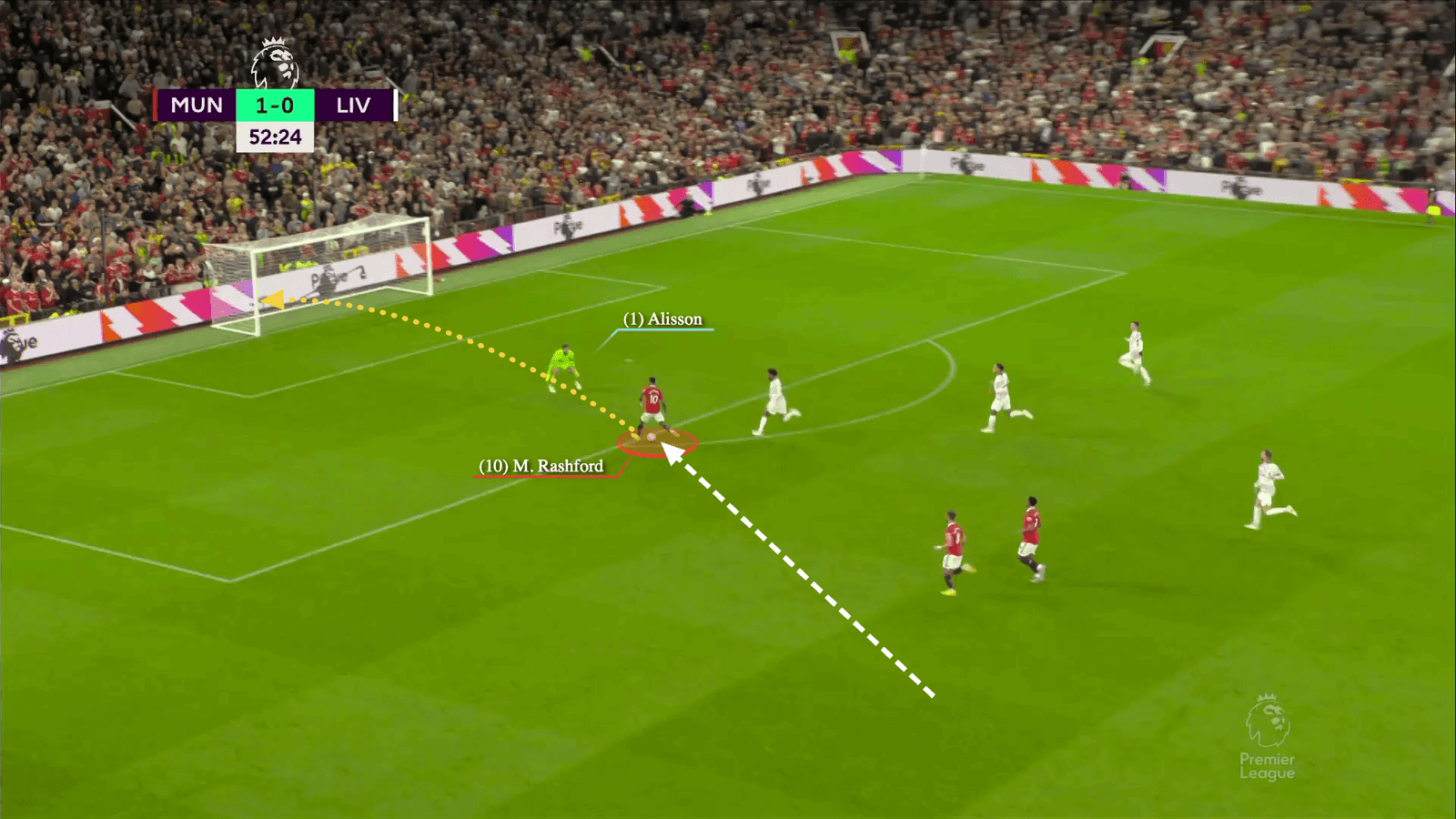
In the 2023/24 Premier League, many sides tried to control games by keeping the ball high up the pitch, working intricate combinations around the edge of the box rather than attacking early. That approach can generate sustained pressure and high xG, but it also raises the chance that one bad touch or interception turns into a dangerous counter‑attack.
Why Slow Combinations Near the Box Naturally Lead to Counter Threat
Any team that keeps multiple players in the final third while circulating the ball around the edge of the penalty area is, by definition, committing numbers forward and squeezing its defensive structure. League trend analysis shows that 2023/24 was already the highest‑scoring 20‑team Premier League season, with 1,081 goals and 3.27 per match, and one driver was a record rise in fast breaks and “high turnovers” turning straight into goals. Those high turnovers and shot‑ending fast breaks often start just after an attacking team loses the ball in or around the final third, especially when full‑backs and central midfielders are ahead of the ball; the cause is patient possession in advanced areas, the outcome is more bodies committed, and the impact is more space behind them for opponents to attack at speed. In that environment, “front‑loaded” teams who insist on probing outside the box are structurally more exposed to counter‑attacks than low‑block or direct sides who rarely have so many players beyond the ball.
Which 2023/24 Styles Favoured Edge-of-Box Combinations?
While not all passing‑dominant teams behave the same way, a broad divide emerged between sides who willingly ceded possession and those who sought to construct through short passes into the final third. Tactical analysis of Nottingham Forest, for example, highlights how unusual they are among low‑possession teams in having high passing accuracy in the final third (around 71.6%) and a relatively high proportion of passes received between the lines, showing they value intricate play in congested central zones when they have the ball. At the opposite extreme, a number of the league’s fastest-improving mid‑table teams moving into 2024/25—Forest again, Bournemouth, Crystal Palace, Everton—are described as less possession‑based, with fewer overall passes per game and a stronger emphasis on transition rather than sustained edge‑of‑box circulation. Mapping that back onto 2023/24, the teams most inclined to work the ball patiently across the front of the box are the ones with higher average possession, more passes into the final third and a preference for short goalkeeper distribution, all of which trend upward across the league yet cluster most strongly around big clubs and possession-heavy systems.
Mechanism: How Edge-of-Box Passing Turns Directly Into Counters
The risk mechanic is straightforward but often underestimated: the more you circulate the ball near the box, the more you compress your own shape. When several midfielders, both full‑backs and perhaps a centre‑back step into advanced territory to maintain pressure, any turnover in that zone creates a situation where the defending team has few players behind the ball and large spaces to protect. Premier League statistical summaries underline that 2023/24 saw record numbers of fast breaks and high turnovers, described as “two strong measures” of the trend toward pressing and counter‑attacking at speed. Once the opponent regains possession, the outcome is a transition situation with the defence “at least partly disorganised,” the exact condition that analysts use to define shot‑ending fast breaks; the impact is that a single failed pass on the edge of the box can be more valuable to the opponent than three or four sterile spells of possession would be to the team that lost it.
When Edge-of-Box Control Backfires More Often
Not every patient possession structure is equally fragile; some contain built‑in counter‑measures, others do not. Teams whose “rest‑defence” leaves both centre‑backs and a holding midfielder behind the ball when full‑backs advance have more cover to slow counters, while those that push both full‑backs high and leave only one defender to handle transition situations are far more exposed. As the Premier League noted moving into 2024/25, goalkeeper distribution has become steadily shorter, with long open‑play launches declining from 2017/18 and short goal kicks reaching close to parity in 2023/24, meaning more possessions now start in deeper zones and are worked patiently through the thirds. If those build‑ups end in edge‑of‑box recirculation without a safe “rest‑defence” shape, the cause is structural overcommitment; the outcome is that every lost ball is a ready‑made counter; the impact is that some possession‑heavy teams concede more from fast breaks than their overall defensive talent would suggest.
Counter-Attacking Specialists and How They Feed on Over-Elaboration
The vulnerability of edge‑of‑box circulation becomes more obvious when you look at transition‑focused sides that exploit it efficiently. Analysis of Nottingham Forest’s style in the following campaign highlights that they recorded the third‑most shot‑ending fast breaks (30) and 101 shots in transition, despite having less of the ball than almost every team above them—showing a deliberate plan to attack quickly when opponents overcommit. League‑wide trend pieces also stress that 2023/24 and 2024/25 have been among the most aggressive eras tactically, with more teams trying to attack and a consequential “remarkable rise in the number of shots and goals scored from fast breaks,” as caution falls and space opens up for counter‑attacks. In practice, that means teams who like to pass around the box often face opponents who actively wait for that pattern, absorb pressure, and then route attacks through wide or central lanes the moment a pass is intercepted; the cause (patient probing) directly fuels the outcome (transitions against), and the impact is a higher-than-expected share of goals conceded on the break for possession‑oriented sides.
Using UFABET When Reading Matches Through Counter-Risk
When a bettor thinks about Premier League matches through the lens of how often a team will circulate around the box and how vulnerable that makes them in transition, the way bets are executed matters. In a context where someone places wagers via ufa168, the key question is whether its pricing on match totals, both‑teams‑to‑score, or even specialised markets like “team to score on the break” or late‑goal props aligns with the tactical reality of a possession‑heavy side facing a transition‑efficient opponent. A structured approach might involve flagging fixtures where a high‑possession, edge‑of‑box team meets a low‑possession, fast‑break specialist—Forest being a template—and then checking whether odds on BTTS, over goals or underdog goal lines are still anchored mainly in raw league position and overall goals scored rather than in the specific counter‑risk dynamic. If prices have not moved to reflect how often such match‑ups produced fast‑break goals during 2023/24, the cause is a gap between tactical nuance and broad market perception; the outcome is potential micro‑edges in those lines; the impact is that tactical understanding becomes more than just narrative and feeds directly into pre‑match decisions.
Practical Indicators: How to Spot “Box-Circulation → Counter” Fixtures
To make this idea usable before a match, you need concrete cues rather than vague impressions. Premier League stats pages for passes into the final third and short goal‑kick percentages provide one layer, highlighting players like Trent Alexander‑Arnold who lead the league in passes into the attacking third (255 in mid‑season 2023/24) and teams that prefer to build short from the back. Combining that with tactical analysis of specific clubs—showing, for example, that Forest record the third‑fewest high turnovers but the third‑most shot‑ending fast breaks—reveals which side is more likely to sit off and spring counters when their opponents overplay around the box. Add in recent clips and stats on “errors leading to shots” or high‑turnover goals, and you get a shortlist of fixtures where an opponent’s patience near the penalty area meets a rival’s ruthlessness in transition, which in turn justifies slightly higher expectations of goals and BTTS than a simple comparison of league positions might suggest.
Example Checklist for Pre-Match Counter-Risk Assessment
Once you have that logic, you can turn it into a repeatable checklist that guides how much weight to give counter‑attack risk in your analysis:
- Does Team A rank high in passes into the final third and prefer short build‑up from goal kicks, indicating frequent edge‑of‑box circulation ?
- Does Team B sit in a lower‑possession bracket but show strong metrics in fast breaks, transition shots or goal‑ending high turnovers (Forest’s 30 shot‑ending fast breaks being a template) ?
- Does Team A push full‑backs and midfielders high in attack, as seen in tactical trend articles, leaving space behind when possession is lost ?
- Is the match context (scoreline expectations, stakes, venue) likely to encourage Team A to dominate possession and keep probing near the box, rather than playing more directly or cautiously?
If several answers are “yes,” the cause is an identifiable stylistic clash; the outcome is a higher baseline for counter‑attack opportunities; the impact is that pre‑match leans toward goals, BTTS or underdog goal lines may be more defensible than simple table‑based heuristics would suggest.
Where casino online Habits Can Distort Counter-Based Judgement
Thinking clearly about counter‑attack risk depends on linking long‑run patterns of play to expected outcomes, which is a slower process than reacting to single dramatic moments. In a wider casino online environment, bettors who see one well‑read “counter‑attack” angle fail—say their chosen underdog misses a big transition chance—may chase frustrations in rapid, high‑variance games unrelated to football, diluting the signal about whether their tactical logic was sound. When those other activities are not tracked separately, it becomes difficult to judge whether reading edge‑of‑box circulation and transition risk actually helped or hurt across the season, because football results are drowned out by noise from non‑football bets. Separating bankrolls and records for tactically informed Premier League bets ensures that if counter‑risk predictions underperform, you can adjust the model itself—perhaps by tightening criteria around fast‑break metrics or possession profiles—instead of blaming external volatility.
Summary
In the 2023/24 Premier League, the combination of possession‑heavy teams working the ball around the penalty area and opponents honed for direct transition helped push goals and fast‑break numbers to record levels. League data show that high turnovers and shot‑ending fast breaks rose across the division, while case studies like Nottingham Forest highlight how low‑possession sides with efficient counters can punish rivals who overcommit near the box. For pre‑match analysis, recognising when an “edge‑of‑box circulation” style meets a transition‑specialist opponent allows you to anticipate counter‑attack risk more accurately than league tables alone, as long as those insights are fed into a disciplined checklist and kept separate from unrelated gambling behaviour.
