


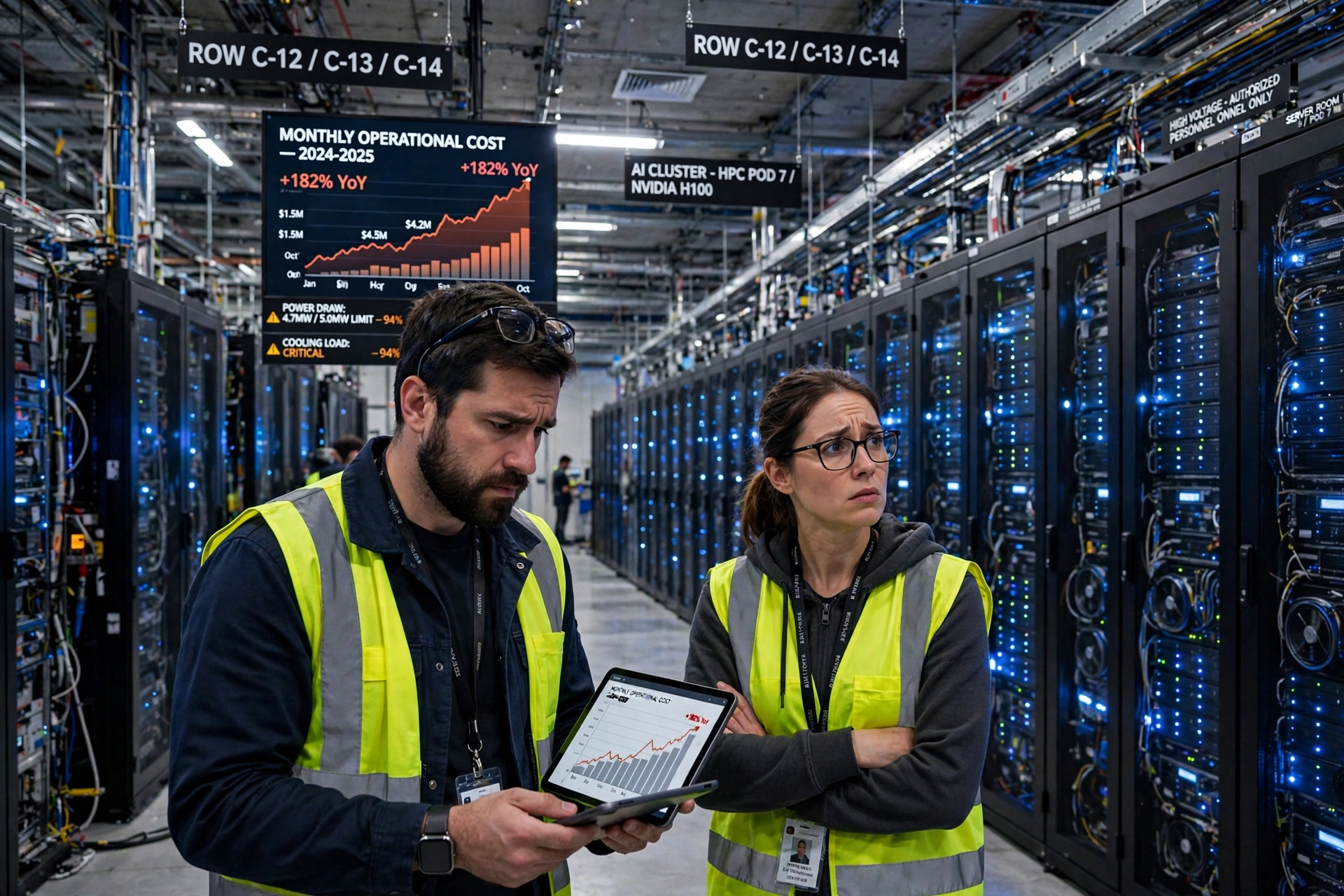
The artificial intelligence boom has produced some extraordinary numbers, but a growing number of analysts are now asking an awkward question about them. The money being poured into data centers, chips, power contracts and networking equipment is expanding far faster than the revenue that AI services are currently bringing in. As The Register reported this week, forecasts now suggest that infrastructure spending will outstrip expected AI revenue, leaving a gap that the industry will eventually have to close, explain or finance for longer than many investors assumed.
That does not mean AI is failing. Demand for models, assistants, coding tools and automated customer support is real, and usage is climbing across almost every sector. It does mean, however, that the build-out is running ahead of the business case in ways that are becoming harder to ignore. Data centers take years to plan and build, while AI products can gain or lose users in a matter of months. When those two timelines collide, the result is a very expensive bet on demand that has not fully arrived yet.
Spending Is Running Ahead of Sales
The logic behind the spending is easy to understand. The companies that control computing capacity control the pace of AI development, and none of the major cloud providers wants to be caught short when a customer asks for more capacity. Microsoft, Google, Amazon and Meta have all treated infrastructure as a strategic weapon, racing to secure graphics processors, land, electricity and cooling before their rivals do. Scarcity has made speed feel safer than caution.
The problem is what happens after the ribbon is cut. A new facility has to be filled with paying workloads, and those workloads have to earn enough to cover not only electricity and staff, but also the rapid depreciation of hardware that can be overtaken by a newer generation of chips within a few years. We explored a similar concern in our earlier coverage of how AI data centers are getting so expensive that the math no longer adds up, and the latest forecasts suggest that pressure is intensifying rather than easing.
Enterprise customers, meanwhile, are moving more carefully than the marketing suggests. Many companies are still running pilots, negotiating data rules, checking output quality and trying to work out which AI tools actually save money. A chatbot subscription or a modest cloud bill from thousands of cautious customers does not yet balance the cost of facilities built for a much larger future.
Why the Gap Matters for Investors
For years, investors rewarded AI spending almost automatically, treating every new data center announcement as proof of ambition. That mood is starting to change. Recent market moves covered by Reuters showed debt-heavy AI infrastructure firms falling sharply as higher interest rate expectations focused attention on how the build-out is being financed. When borrowing is cheap, a long wait for returns is tolerable. When borrowing is expensive, the same wait becomes a central risk.
Debt is the key word. Increasingly, this boom is not funded only from the enormous cash reserves of the biggest technology companies. Smaller cloud operators, data center developers and specialist firms are borrowing heavily against expected future contracts. If those contracts arrive late, arrive smaller than expected, or are renegotiated at lower prices, the facilities do not become cheaper to run. The loans still have to be serviced, the power still has to be paid for, and the hardware still loses value.
What Enterprises Should Watch
For businesses buying AI services, the spending gap cuts both ways. In the short term, fierce competition for customers could keep prices attractive, as providers with spare capacity fight to fill it. Discounts, bundled credits and generous trial terms are all more likely when suppliers need workloads quickly. Procurement teams that stay flexible, avoid unnecessarily long lock-ins and compare providers carefully could benefit from that pressure.
In the longer term, though, consolidation is a real possibility. Smaller operators under financial strain could be bought, merged or forced to raise prices, and customers who built critical processes on a fragile provider could face an awkward migration. The web itself is also feeling the strain of the AI transition, as we noted in our report on Microsoft documents warning that AI could weaken the open web. Enterprises should therefore ask not only what a service costs today, but who owns the infrastructure behind it and how sustainable that economics looks.
A Boom That Still Has to Prove Itself
None of this guarantees a crash, and it would be a mistake to confuse a financing gap with a lack of technological progress. AI systems are genuinely improving, and some of the capacity being built now will look prescient if adoption accelerates. Railways, broadband networks and cloud computing all went through periods when investment ran ahead of revenue before demand caught up.
The uncomfortable part is the scale and speed of the current cycle, and how much of it depends on optimistic forecasts rather than contracted income. The industry has spent the past two years arguing that capacity is destiny. The next phase will be less forgiving: utilization rates, contract quality, energy costs and actual customer revenue will matter more than announcement headlines. The AI math is not broken yet, but it is no longer math that investors are willing to take on faith.
