


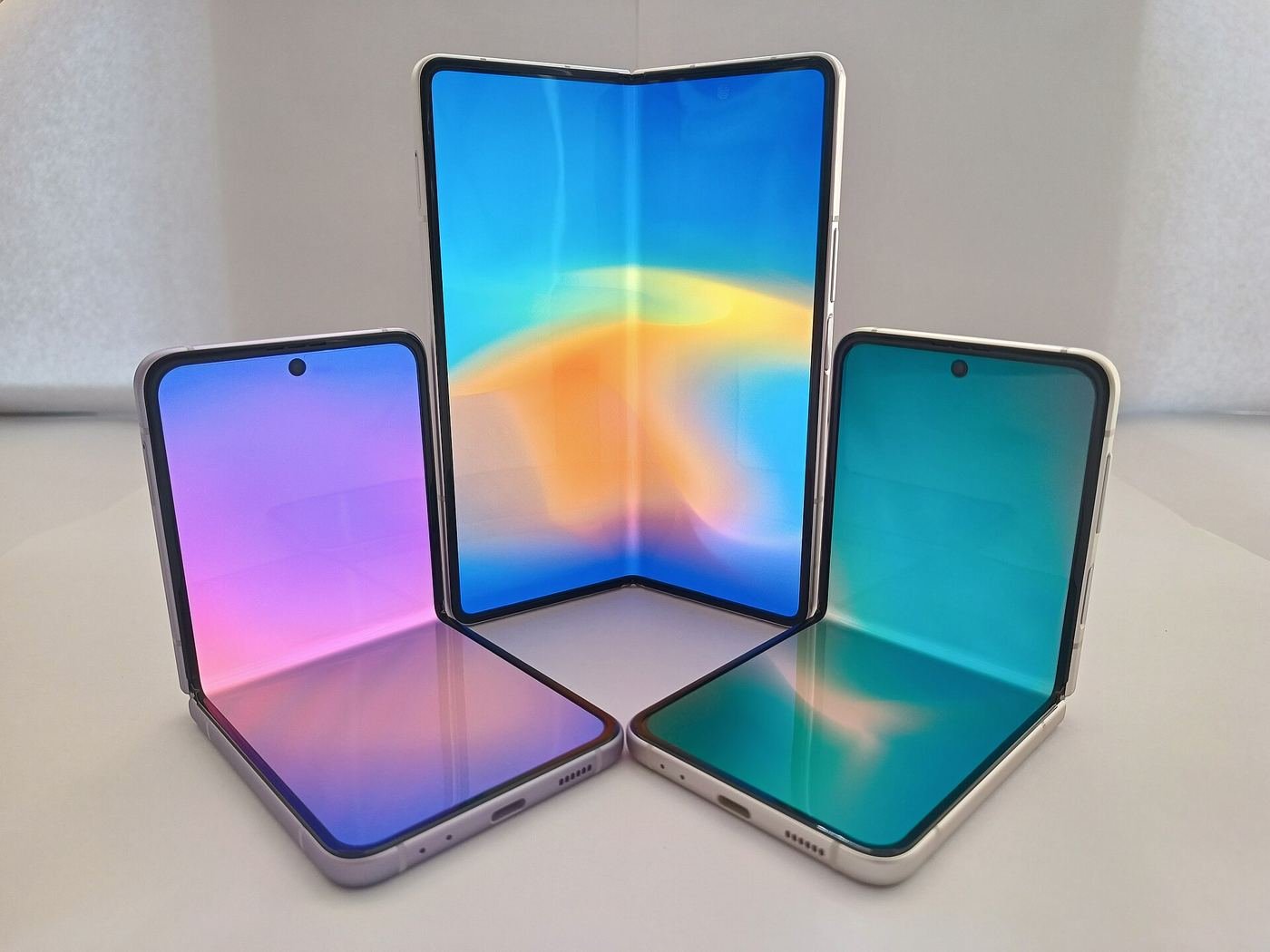
Foldable phones have spent years as an expensive curiosity, admired in shops and rarely seen in pockets, but in 2026 the category finally found its footing. Samsung, the long-time leader, captured 69 percent of global foldable shipments in the third quarter of 2026, its best result since 2023, according to Smart Analytics Global. Its Galaxy Z Fold 8, a wide book-style phone that opens into a small tablet, accounted for nearly 55 percent of Samsung’s foldable shipments in the quarter, and helped the company grow shipments by 13 percent year on year even as the overall foldable market shrank by 2 percent to just over 7.5 million units. The wider format is now the most popular style, making up about 45 percent of foldable shipments. For years the main complaints were price, weight and a crease down the middle of the screen; newer models are thinner, lighter and tougher, and the software now treats the big unfolded screen as a real workspace rather than a novelty.
What the Evidence Shows
The next test comes from Apple, which released its first foldable, the iPhone Duo, in late October 2026. Analysts expect Apple to overtake Samsung in the final quarter of the year and to drive the whole market back to double-digit growth, with foldable shipments forecast to rise sharply in 2027. That would be a familiar pattern: Apple arriving late to a category and making it mainstream, as it did with smartwatches. The obstacles have not gone away. Foldables still cost far more than ordinary phones, with Apple’s model priced above Samsung’s, and analysts warn that high prices and a lack of compelling uses still hold back mainstream adoption. Foldables remain only about 2 percent of the overall smartphone market. But with Samsung, Huawei and now Apple all competing, and screens and hinges improving every year, the foldable phone is no longer a gimmick. For buyers who read, watch and work on their phone, it is finally a serious choice. Reporting and analysis from sources such as IEEE Spectrum track the same developments, and specialists following foldable phones 2026 say the direction is now consistent across independent lines of evidence.
The Wider Context
Adoption of foldable phones 2026 follows a familiar pattern with an unfamiliar speed. Early users tolerate rough edges in exchange for advantage, mainstream users arrive when the tool disappears into existing workflows, and the market consolidates around whoever made that transition feel effortless. Vendors are racing less on raw performance now than on integration, support and trust.
What Happens Next
The realistic forecast for foldable phones 2026 is steady integration rather than sudden replacement: embedded in products people already use, improving in increments, and regulated in proportion to its reach. The companies and institutions that plan on that basis, training staff and redesigning processes instead of chasing launches, are the ones the adoption data tends to vindicate. You can follow related developments in our coverage of technology.
It is also worth remembering how quickly the picture in this area has changed before. Positions that looked settled a few years ago have been revised as new data arrived, and the same humility is appropriate now. The strongest coverage of this subject, and the most useful advice, tends to come from sources that update their views openly when the facts move, rather than defending an earlier position long after it has stopped fitting the evidence available.
